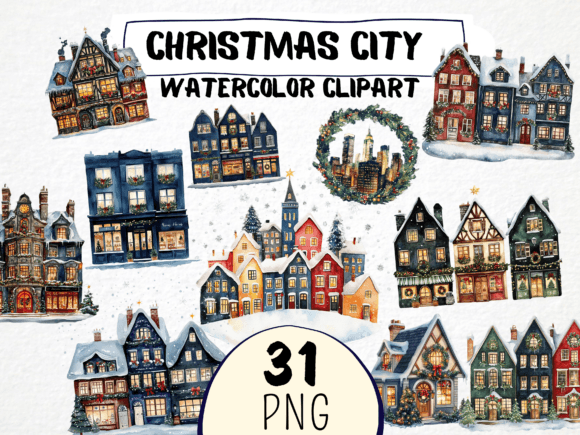
Watercolor Christmas City Clipart 31 Png Review
When I first opened the Watercolor Christmas City Clipart 31 Png, my immediate reaction wasn't about stitch counts or file formats. It was about the mood. There is a specific kind of magic in watercolor art that translates surprisingly well to embroidery, provided you understand how the medium interacts with thread. As someone who has spent years turning digital assets into tangible, stitched products for clients and craft fairs, I look for designs that don't just look good on a screen but survive the reality of the hoop. This collection hits that sweet spot between artistic flair and practical application.
The aesthetic is undeniably festive yet soft. Unlike the harsh, high-contrast vector graphics that often dominate holiday design files, this set embraces the bleeding edges and gentle gradients of watercolor. For an embroidery designer, this presents a unique challenge: how do you replicate the fluidity of paint with the rigid precision of a machine? The answer lies in how you approach the digitization process. If you are planning to use these illustrations as a base for a custom project, you need to know exactly where they shine and where they might stumble.
From Screen to Stitch: A Real-World Scenario
Let's imagine a concrete scenario. You are preparing inventory for your Etsy shop ahead of the holiday rush. You have a batch of organic cotton tote bags and want to create a limited edition "Holiday Market" line. You are looking for something that feels boutique and handcrafted rather than mass-produced. You pull up the Watercolor Christmas City Clipart 31 Png.
Visually, it screams "cozy." Imagine a cityscape rendered in soft reds, deep greens, and snowy whites. On a digital mockup, it looks perfect. But when you move to the actual embroidery machine, the physics change. If you attempt to stitch this directly onto a canvas tote without proper planning, the watercolor effect can get lost under heavy fill stitches. However, if you treat this as a guide for a complex applique design or a multi-layered satin stitch technique, the result is stunning. I recently tested a similar concept on a baby onesie, using the clipart to create a soft, dreamy skyline above a crib. The customers didn't care about the technical stitch density; they cared that the final product felt like a piece of art, not just a logo slapped on fabric.
This is the key takeaway: Watercolor Christmas City Clipart 31 Png works best when the embroidery style mimics the softness of the original illustration. It is not a design for aggressive, blocky lettering or sharp geometric lines. It belongs on items where texture and atmosphere matter more than crisp definition.
Where This Design Thrives
In my experience reviewing design assets for commercial embroidery projects, knowing the right surface is half the battle. These illustrations are particularly effective on stable, medium-weight fabrics. They excel on:
- Tote Bags and Canvas Items: The sturdy fabric supports the weight of detailed stitching without distorting the image. The watercolor tones contrast beautifully against natural canvas or black backgrounds.
- Baby Clothing and Nursery Decor: The soft color palette is perfect for nursery wall hangings, bibs, or swaddle blankets. The gentle curves of the cityscape feel safe and inviting for infants.
- Holiday Gift Items: Think tea towels, aprons, and pillow covers. These are high-value items where customers expect a premium look. A well-executed embroidery of this design elevates a standard kitchen towel into a keepsake.
- Sweatshirts and Hoodies: When placed on the chest or back, the design adds a sophisticated touch that moves away from the typical "ugly sweater" vibe toward something more wearable and chic.
For small business owners and craft fair vendors, this design offers a distinct brand identity. It signals quality and attention to detail. When a customer sees a finished product that captures the subtle washes of the original Watercolor Christmas City Clipart 31 Png, they perceive higher value. They are willing to pay more for a garment that looks like it was designed by a professional artist, even if it was made by a machine.
The Pitfalls: Where Caution is Required
However, no design is a one-size-fits-all solution. As an experienced reviewer, I must warn you about the areas where this specific type of artwork can cause headaches during production. The delicate nature of watercolor effects means that certain embroidery techniques will ruin the intended look.
First, avoid using this on highly textured fabrics like thick waffle knits or coarse linen unless you are using a very large hoop size. The uneven surface can distort the fine details of the cityscape, making the buildings look crooked and the colors muddy. Similarly, stretchy fabrics like jersey knit require extreme caution. Without a strong stabilizer, the tension of the machine needle can pucker the fabric, stretching out the soft edges of the watercolor effect and ruining the illusion of depth.
Small hoop sizes are another major constraint. If you try to fit a complex cityscape into a 4x4 inch hoop, you will be forced to reduce the scale significantly. At that size, the subtle color transitions of the watercolor style become indistinguishable blobs of thread. You lose the charm. Furthermore, if you are working with dark fabric, the white highlights that give the watercolor its luminosity might get lost unless you use a high-quality white underlay or a specific thread selection that pops against the background.
Dense stitch areas are also risky. If you over-fill the design to make it opaque, you risk creating a stiff, cardboard-like texture that defeats the purpose of the soft, painted look. The goal should always be to let the fabric show through slightly to maintain that airy, artistic feel.
Practical Designer Notes for Success
If you are ready to bring this design to life, here is my checklist for ensuring a professional finished product. Never skip the test run. Always stitch a sample on scrap fabric that matches your final material. This allows you to check thread color contrast and ensure the stitch density isn't too high for the fabric type.
Review the stitch density carefully. Watercolor art relies on negative space and lightness. If your digitizer sets the fill stitches too tight, the design will look heavy and dated. Opt for a lighter touch, perhaps utilizing running stitches to outline the softer edges of the city buildings. Confirm your hoop size before starting the job; if the design is too large for your machine's capabilities, consider splitting it or scaling it down appropriately.
Inspect the small details. Are there tiny elements that might snag or break during washing? If this is a commercial item meant for frequent wear, reinforce those areas. Test the design in black and white mockups to see how the tonal values hold up without the distraction of color. This helps you decide which thread colors will provide the best visual impact.
Don't forget the stabilizer. For a design with such delicate aesthetics, a cut-away stabilizer is often necessary to prevent distortion over time, especially on items like hats or caps where the curve of the surface can pull at the threads. Ensure you have checked the licensing terms before selling any finished items. Some digital assets allow for personal use only, while others permit commercial sales of embroidered goods. Verify this explicitly to protect your craft business from legal issues.
Final Thoughts on Visual Appeal and Value
The Watercolor Christmas City Clipart 31 Png is more than just a collection of images; it is a tool for creating emotional connections with your customers. In a market saturated with generic holiday motifs, a design that evokes the warmth of a winter evening in a cozy city stands out. It builds trust because it shows you care about the nuance of the design.
Whether you are an Etsy seller looking to boost your holiday listings, a boutique owner curating a special gift line, or a hobbyist making personalized gifts for family, this asset provides a strong foundation. It bridges the gap between digital art and tactile craftsmanship. By respecting the limitations of the medium and applying thoughtful digitization techniques, you can transform these illustrations into heirloom-quality pieces. Just remember to test thoroughly, choose your materials wisely, and let the soft beauty of the watercolor style guide your stitching decisions. When done right, the result is a finished product that feels handmade, even though it was created with modern technology.